
Why we almost always recommend 12V.
A closer look at why low-voltage (12V) outdoor lighting is the right choice for nearly every residential property — and the few cases where line-voltage still has its place.
Low voltage advantages.
- Flexibility. Fixtures can be moved as your landscape matures.
- Concealment. Smaller fixtures integrate invisibly.
- Installation. Direct-burial cable means less digging.
- Safety. 12V is dramatically safer near water features and pools.
- Wiring. No junction boxes per fixture.
- Precision. Pinpoint placement and beam control.
- Efficiency. More light per watt with modern LED.
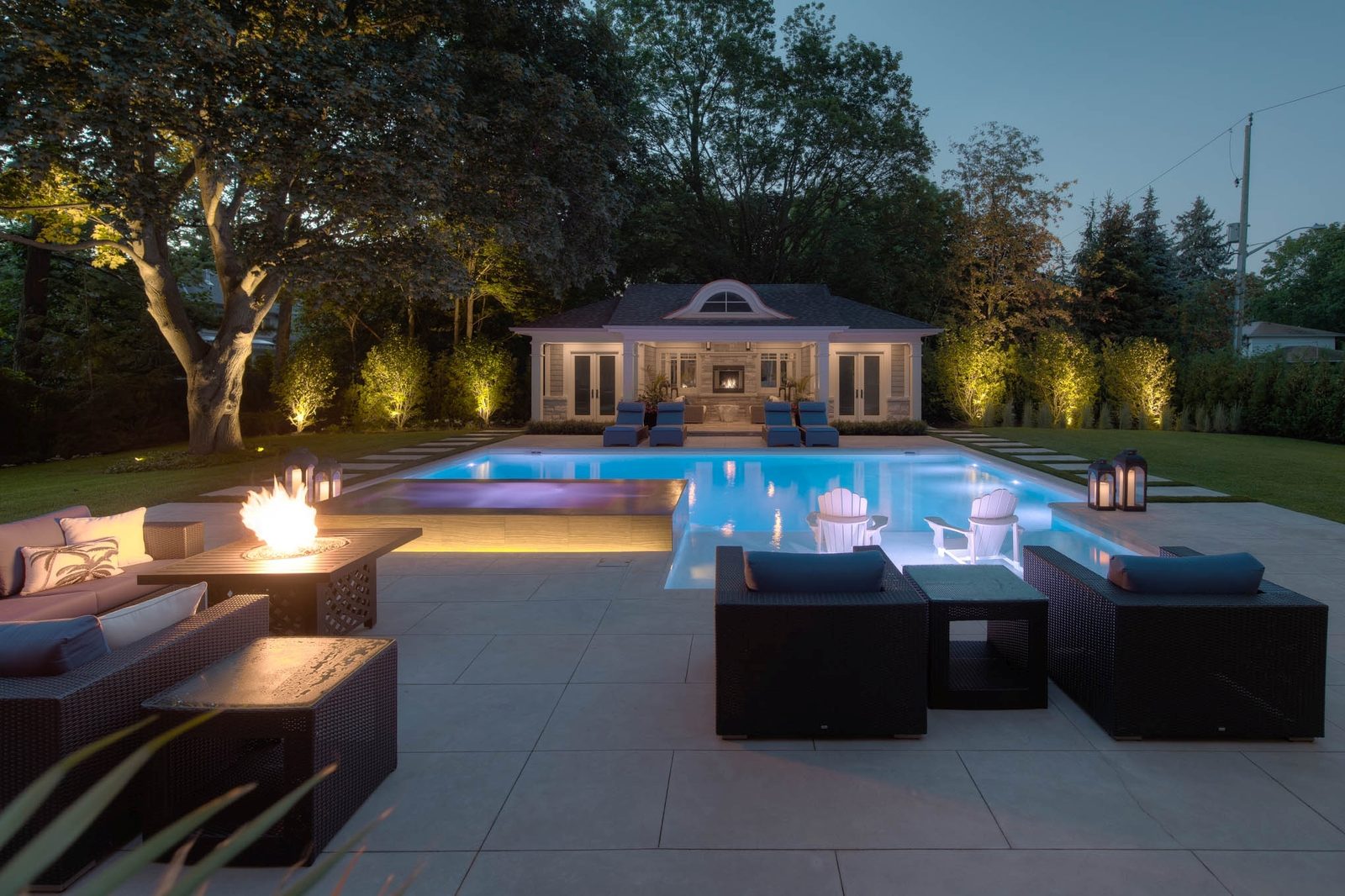
Low voltage that lasts through Toronto seasons.
Sealed brass and copper fixtures
Solid brass and copper develop a patina rather than failing. Every Pro Green install uses brass or copper.
Direct-burial cable, weatherproof connections
We use waterproof, corrosion-resistant connectors at every junction.
Transformers above grade
We mount transformers where snow and rain cannot accumulate against them.
Snow load and ice expansion
Fixtures are placed where plows and shovels will not catch them.
Salt-spray protection
We specify marine-grade brass for fixtures near salted roads or waterfronts.
Seasonal check-in
An annual visit clears leaf debris, replaces the rare failed lamp, and re-aims fixtures.
Low voltage (12V) vs. line voltage (120V).
Low Voltage · 12V
Pro: safer, more flexible, more efficient, smaller fixtures.
Con: higher upfront material cost.
Line Voltage · 120V
Pro: lower upfront material cost; brighter floods for long throws.
Con: 18–24" trenching, junction boxes per fixture, glare-prone.
Low Voltage Questions
The questions homeowners ask once they understand the difference between systems.
Will low voltage be bright enough?
Yes. Modern LED lamps produce more usable light per watt than line-voltage halogen ever did.
Is it truly safer near pools and water features?
Substantially. 12V poses far less risk of electrical injury than 120V.
How long do low voltage LED fixtures last?
Modern LED engines are rated for 25,000–50,000 hours of useful life — 12+ years in residential use.
Can I dim individual zones?
Yes. Modern transformers and controllers support multi-zone dimming and smart-phone control.
Where does line voltage still make sense?
Long pole-mounted security fixtures and distant outbuildings.